
Nature's Restoration: 12 Months of Soft Fascination
Part of our growing photobook collection
For the past many years (16!?), I’ve created a photo book highlighting our favorite family (mis)adventures. While I’ve never tracked the many hours I put in each December (and ensuing January, February sometimes!), the excitement we feel as we crack open the cover is indescribable - and certainly worth the effort. I love seeing how the photos and stories turn out in print, after months of on-screen planning. As much work as it is, I really enjoy the process. ‘Favoriting’ photos from each month ends up being a wonderful way to reflect on the past year and remember many moments that I might otherwise forget.
I start by choosing the photos. As much as I love the reflection, the choice part is hard. My husband takes amazing photos - and a lot of them - so I end up with a huge ‘pile’ in our ‘Favorites’ folder which I then add to a ‘Best of’ folder for that year - which I then sort further once it’s in Mixbook - my online program of choice. That’s where I’m at the time of this writing - deep in the thick of choosing the best.
Which brings me to this final post of 2025, realizing how nice it might be to share some of my favorites - with a focus on the wild ones. Why? Because nature offers something different: soft fascination. As opposed to the harsh, demanding fascination of doom-scrolling or breaking news alerts, soft fascination is effortless and voluntary - the way moving water holds our attention without draining us. It might not feel as immediately exciting as news or updates or videos on our phone, but it actually restores rather than depletes.
This is part of what researchers call Attention Restoration Theory : the idea that exposure to nature helps restore the mental focus that gets depleted by the constant stimulation of our modern lives. We spend our days in what they call 'directed attention' - forcing ourselves to focus on tasks while blocking out distractions. Eventually, that attention muscle fatigues. We get irritable, scattered, and can't concentrate.
So, as I sift through these photos, doing my best to share some favorites, I am tapping into this soft fascination - and hoping you can do the same as you take them in. For the smaller photos, you can click to enlarge them for more detail.
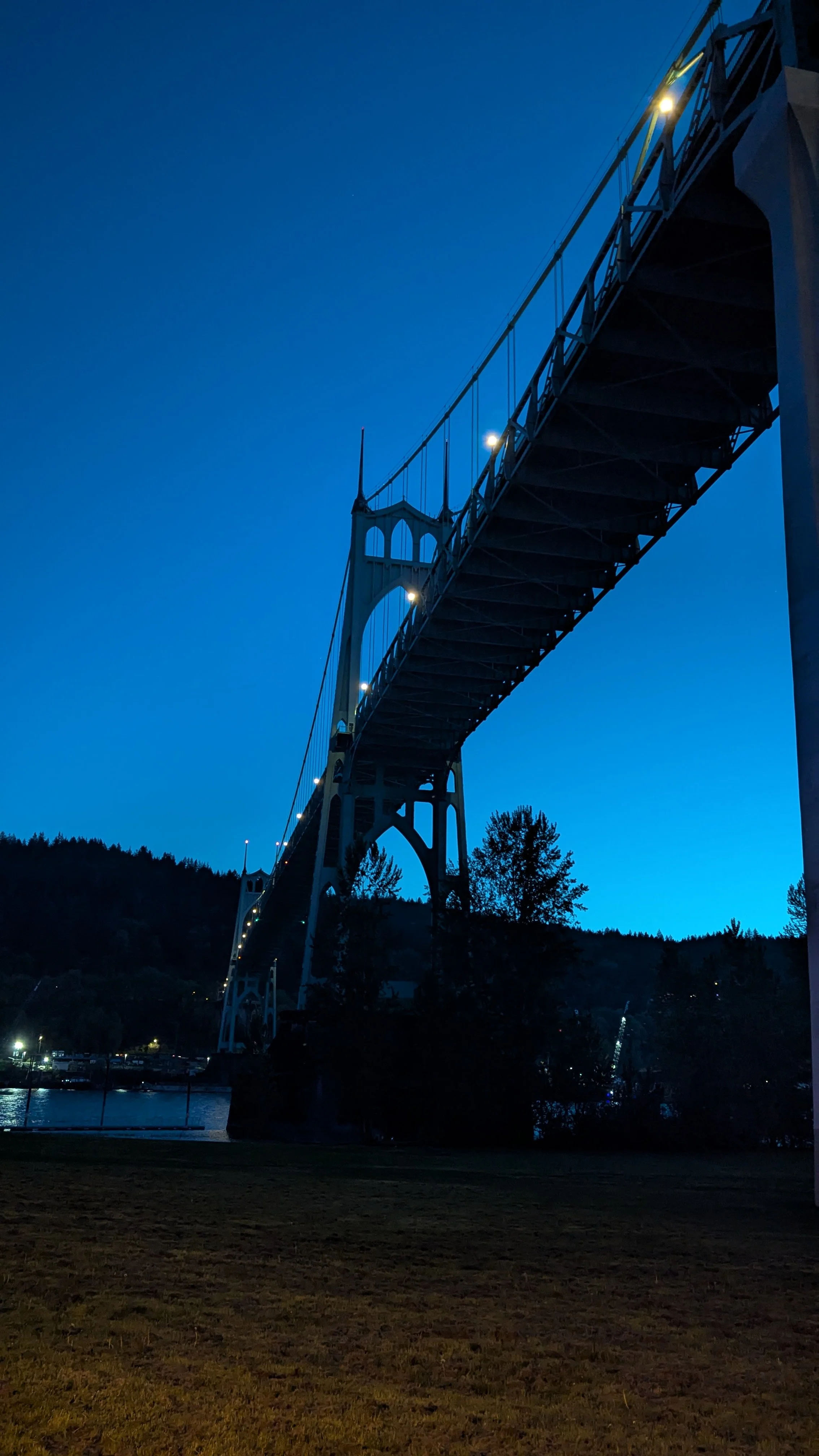
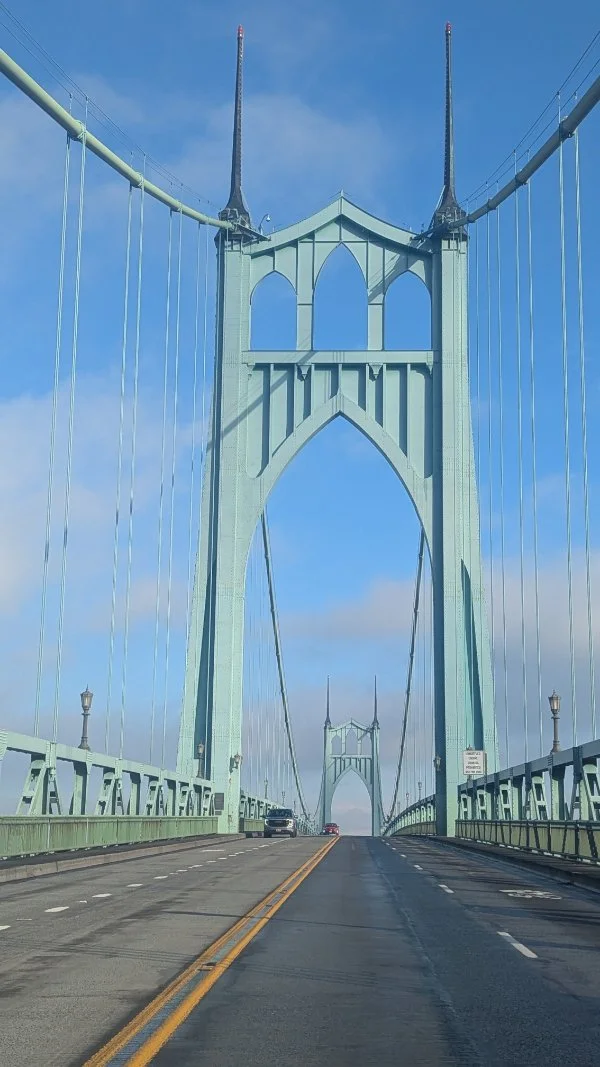
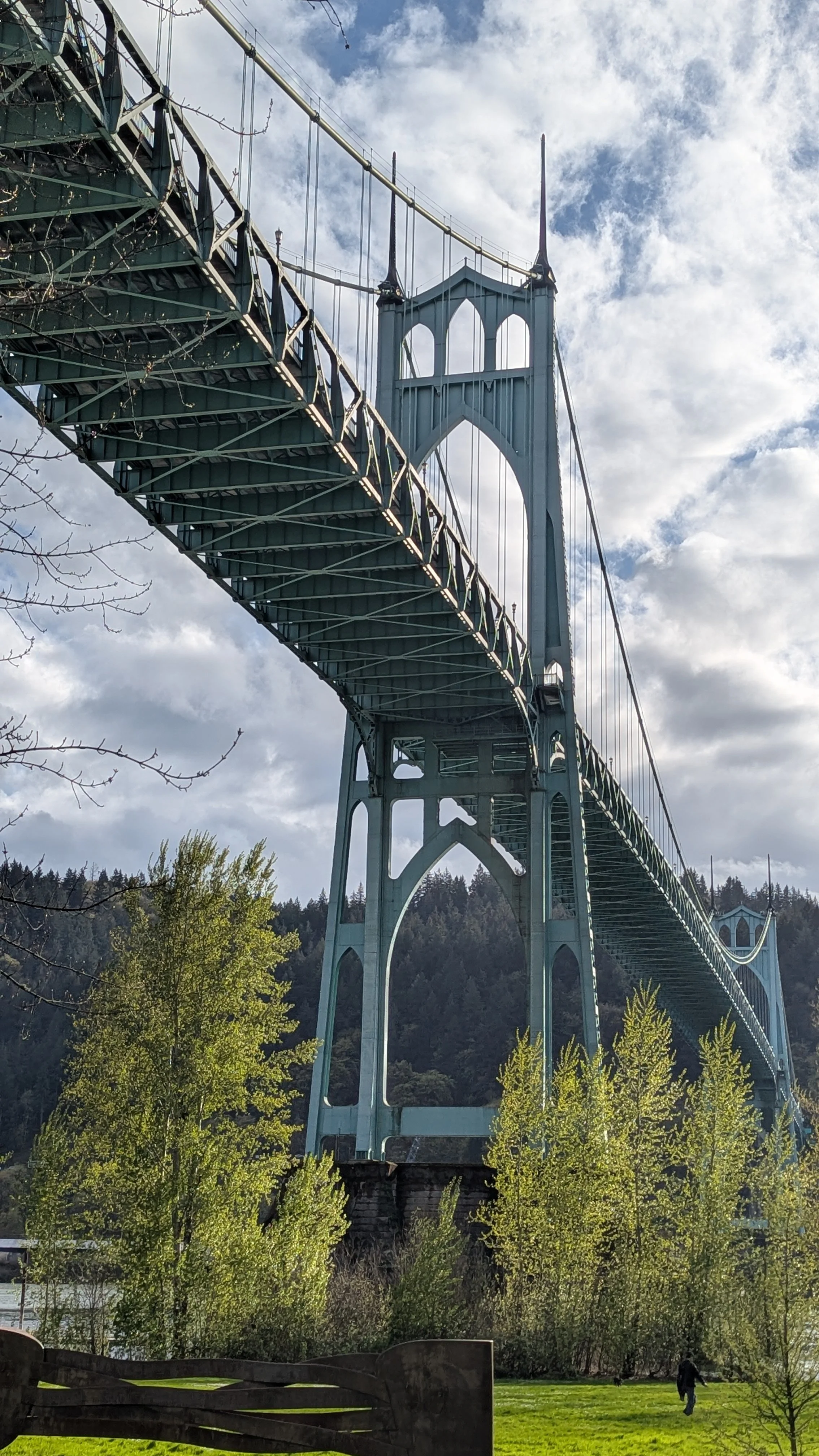
I’ll start closest to home. This is the St Johns Bridge, one of 12 major bridges in Portland (‘Bridgetown’) that span the Willamette River. While these photos clearly aren’t exclusively of nature, this bridge tends to have more of those curved edges and repeating patterns that our nervous systems tend to like. Living just down the street, I love that I get to see the bridge in all sorts of light and various seasons as it towers above Cathedral Park, functional and majestic.
And from on top of the bridge, looking east towards Mt. Hood in the distance, we can move away from the built environment and deeper into nature. My husband is often up at dawn and captures these amazing sunrises on his bike commute. When I look at this photo, I’m struck by the blend of blues, grays and pinks that fade into the yellows and oranges. It leaves me feeling in complete awe of what nature creates, effortlessly.
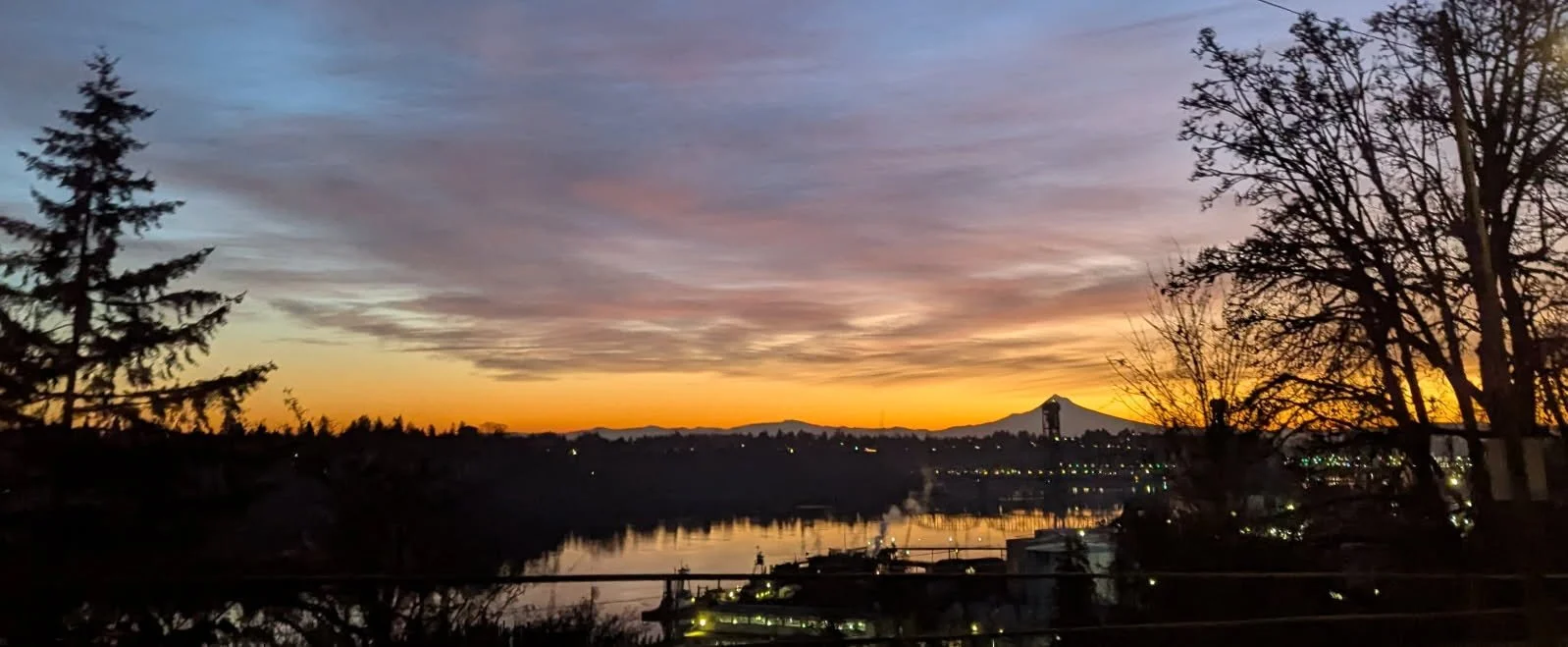
February Sunrise from the St. Johns Bridge in Portland, OR, looking east to Mt. Hood - Photo by Geoff Staton
This next photo is taken at the opposite time of day from the other side of the bridge, looking west from our house. I love the drastically different color palette of the pinks and blues of this clouded sunset. When I stand in front of scenes like these, it’s hard to go back inside. I feel captivated by beauty, having witnessed something magical:
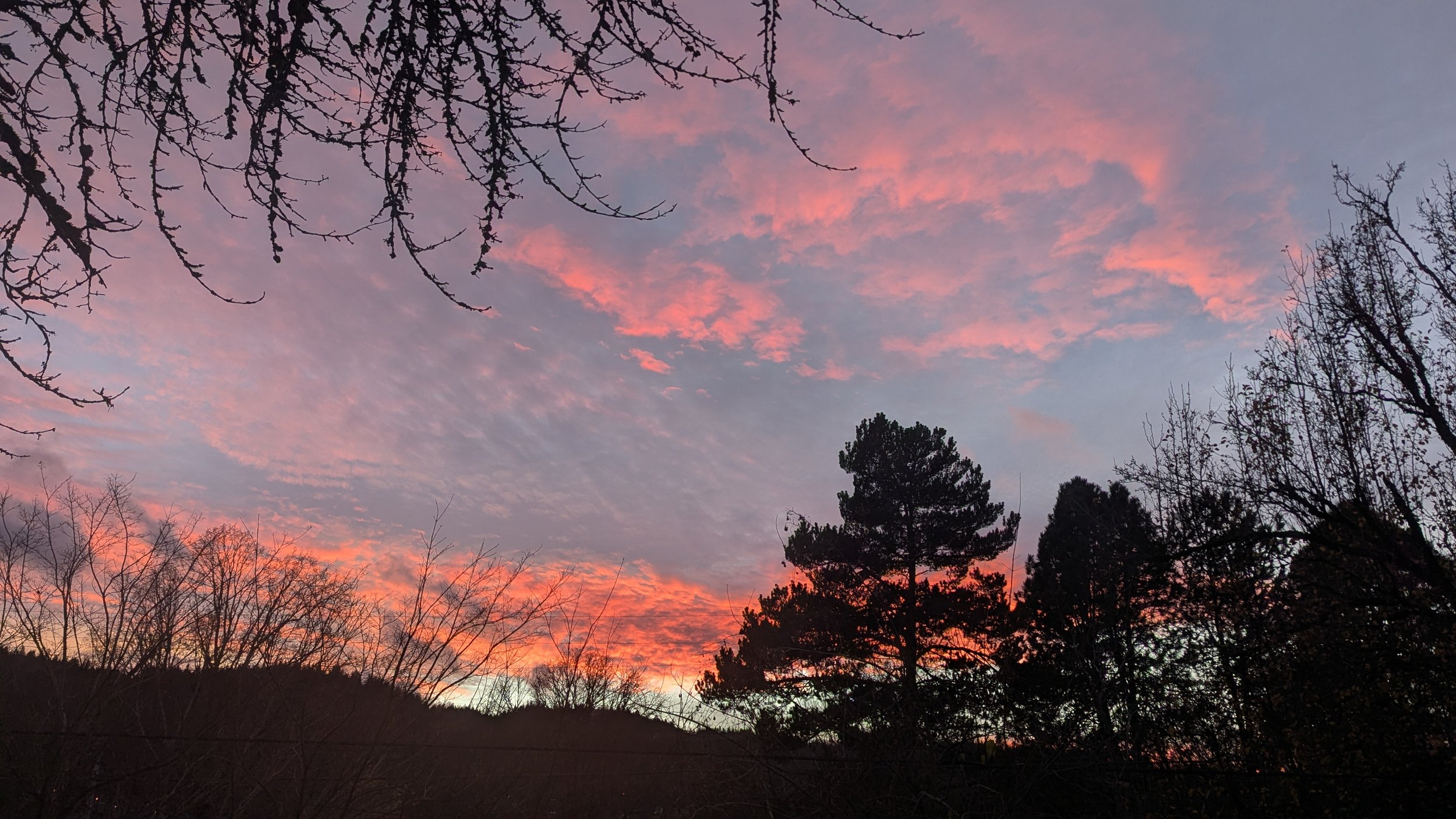
December sunset over Forest Park. Portland, OR - Photo by Tamara Staton
One of my favorite ways to work with coaching clients is to walk together outside - whether in person or on the phone . A few weeks ago, this was my ‘office’, walking around Fort Vancouver in Washington, during this epic sunset. Having access to nature like this while I’m coaching feeds my soul in a way that sitting sedentary on a screen simply can’t. To be able to share various perspectives and parts of myself in this way feels like a superpower. As much as I love being able to see my non-local clients, feeling the support of mother earth in this way feels invaluable for us both.
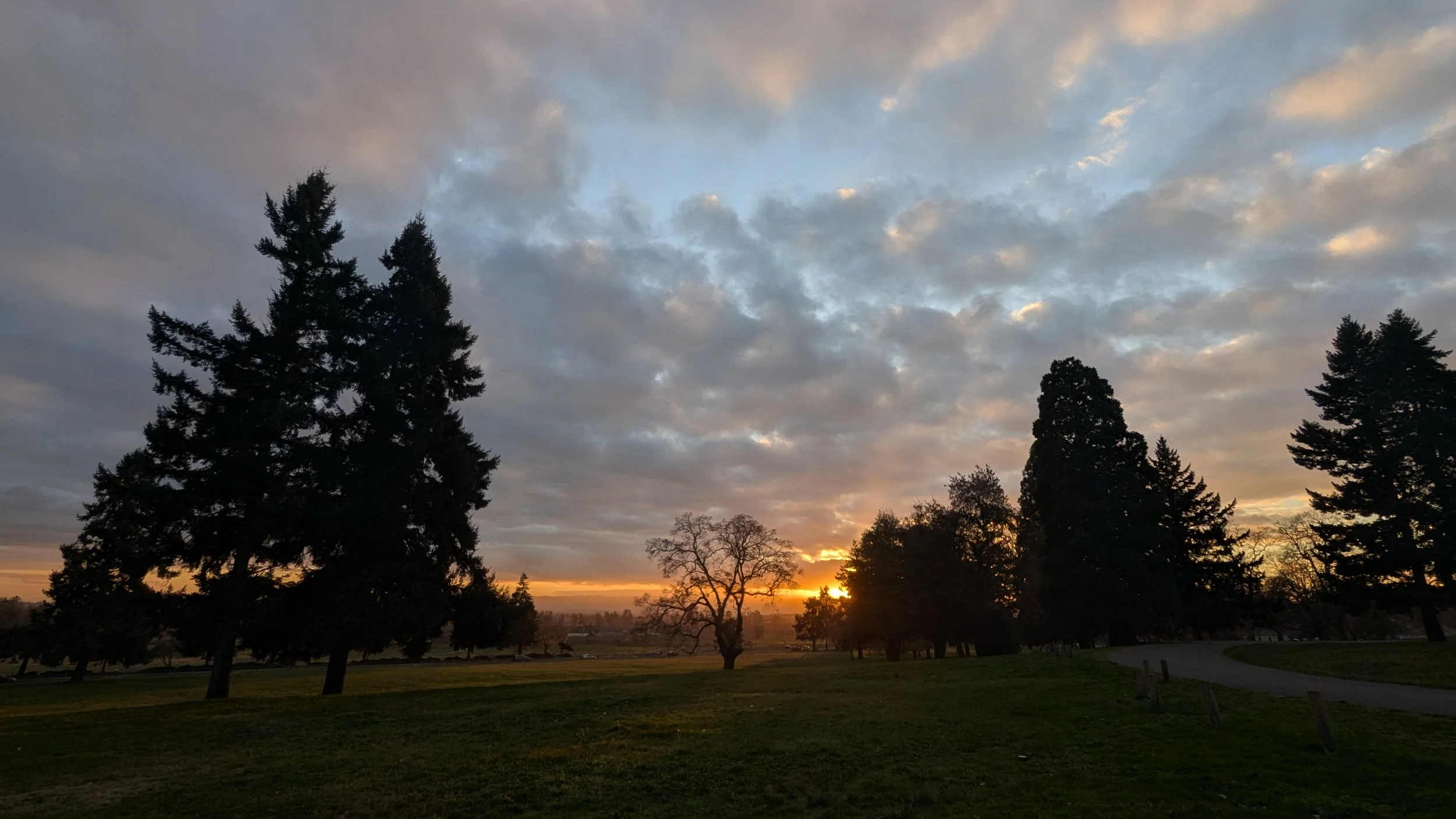
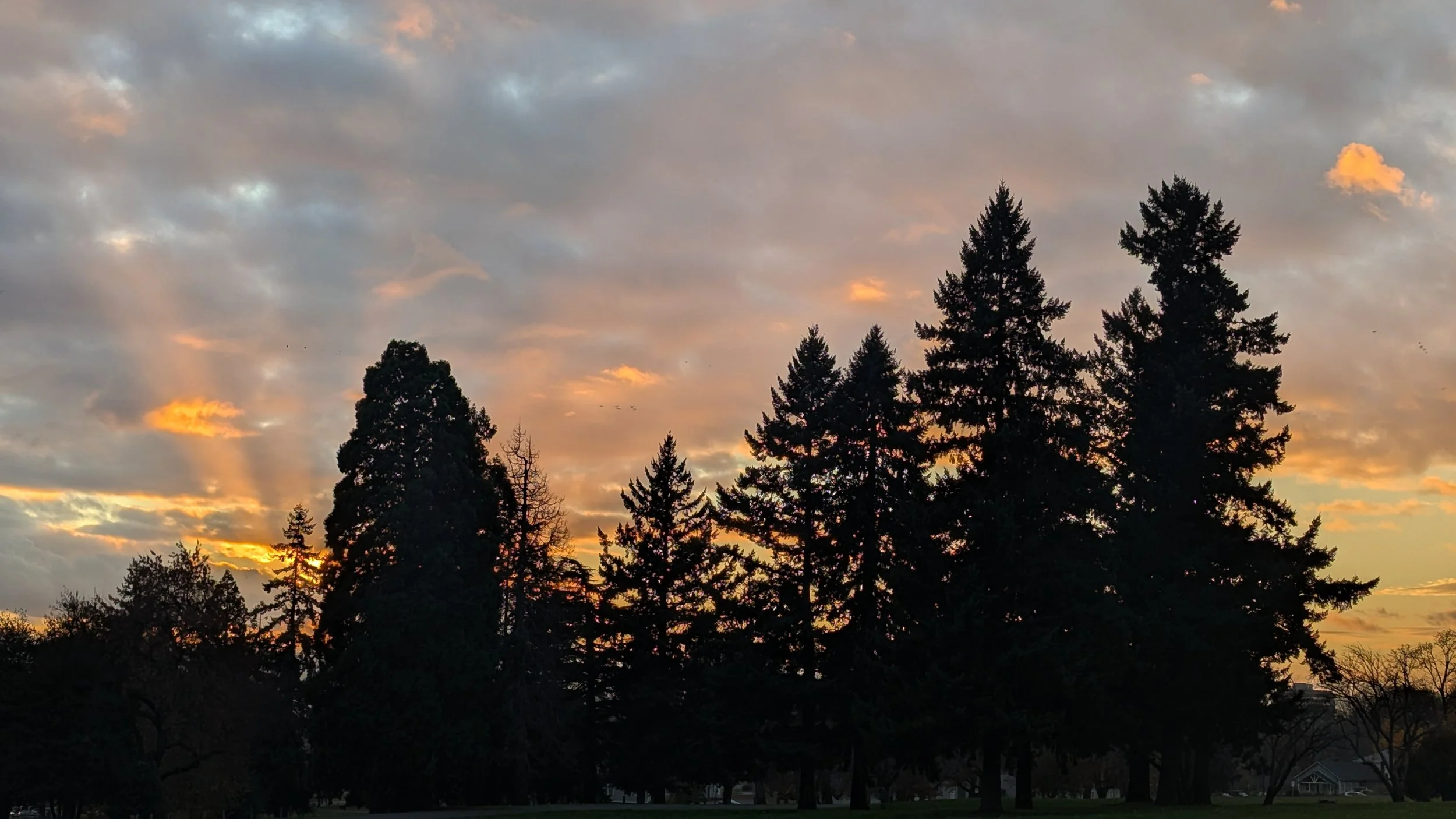
There's something about capturing sunlight that feels deeply captivating. It's our ultimate energy source - no sun, no life - so the pull makes sense. Maybe it's about catching those moments at sunrise or sunset, or in the bright afternoon when it's filtered through trees in ways we never see in an open sky. Or maybe it's simple, like in this next photo on the Salmon River: the dance between dark and light, the way rays carve through shadow and highlight contrast.
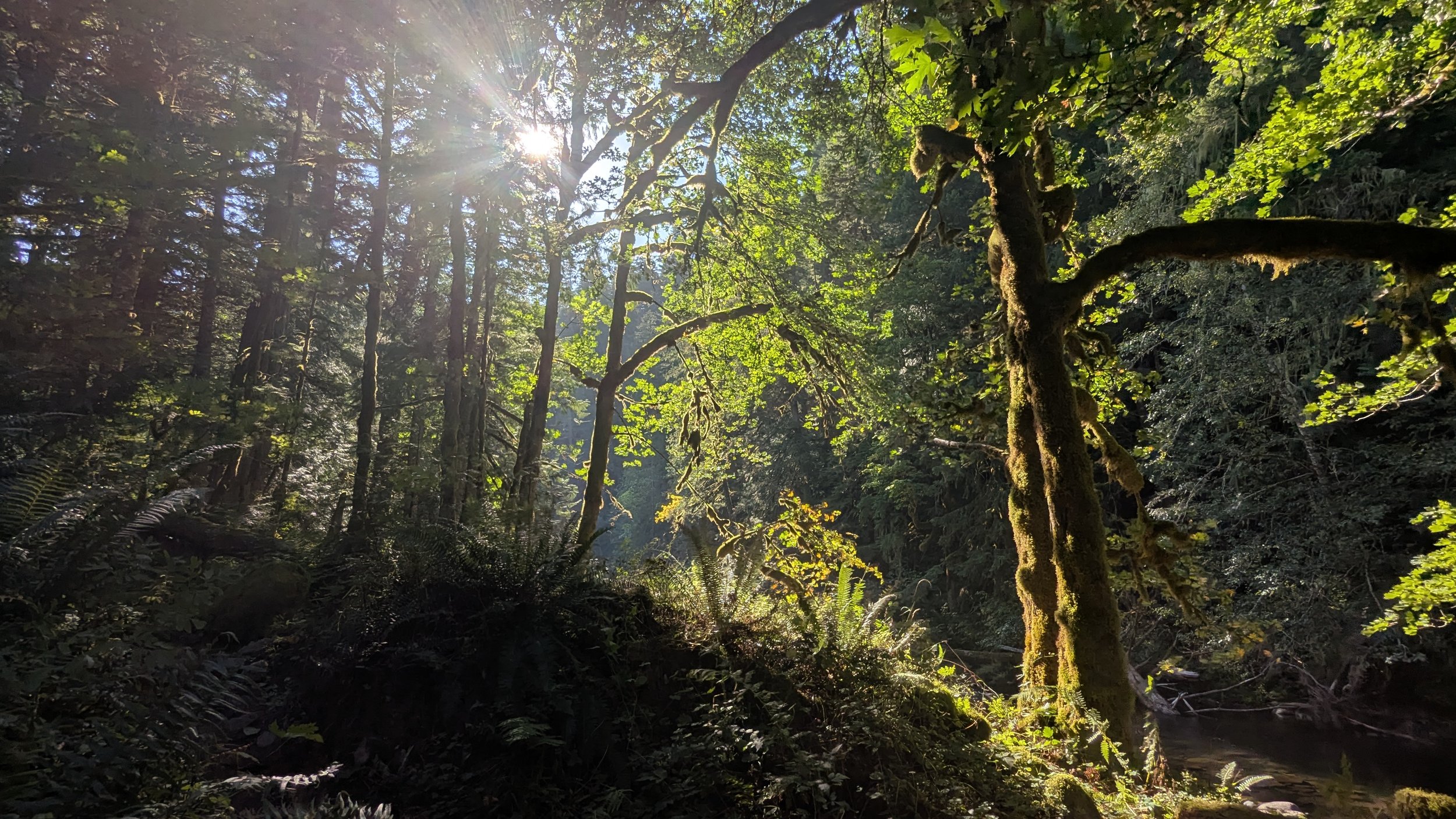
September light on the Salmon River Trail - Zigzag, OR
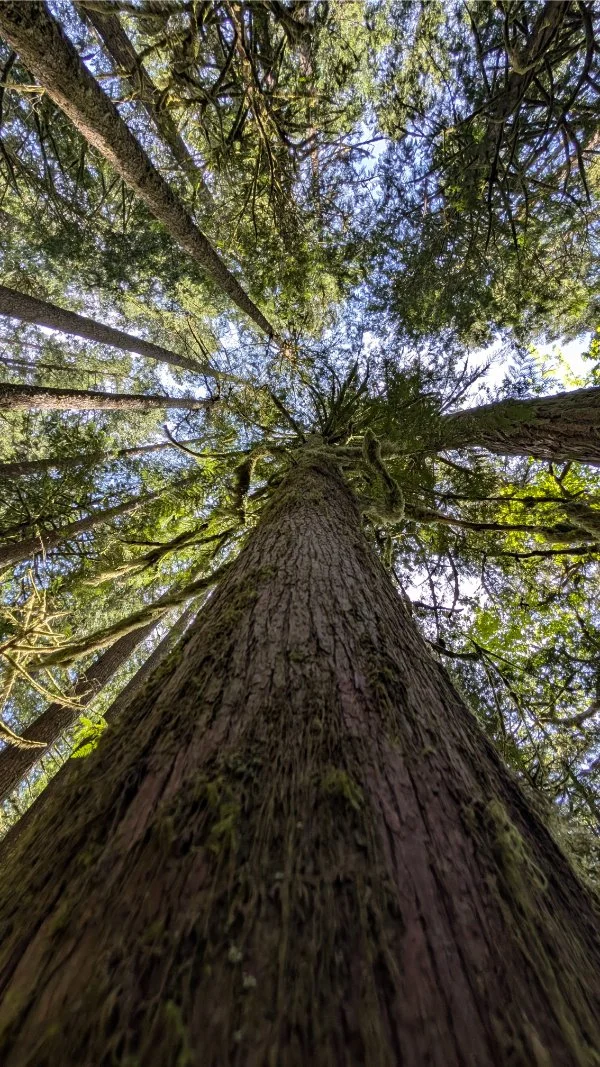
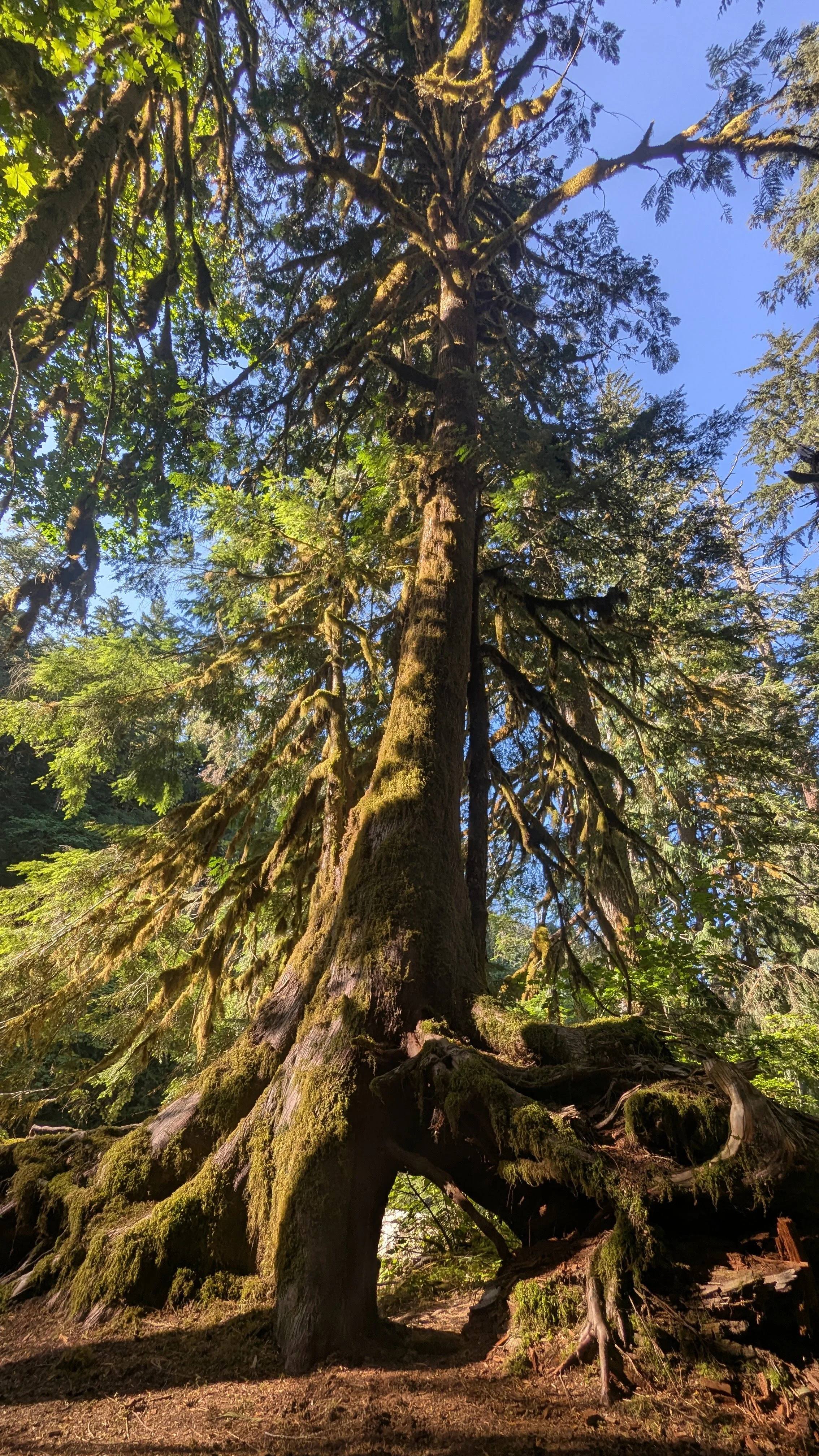
Mother Cedar in May - Salmon River, Oregon
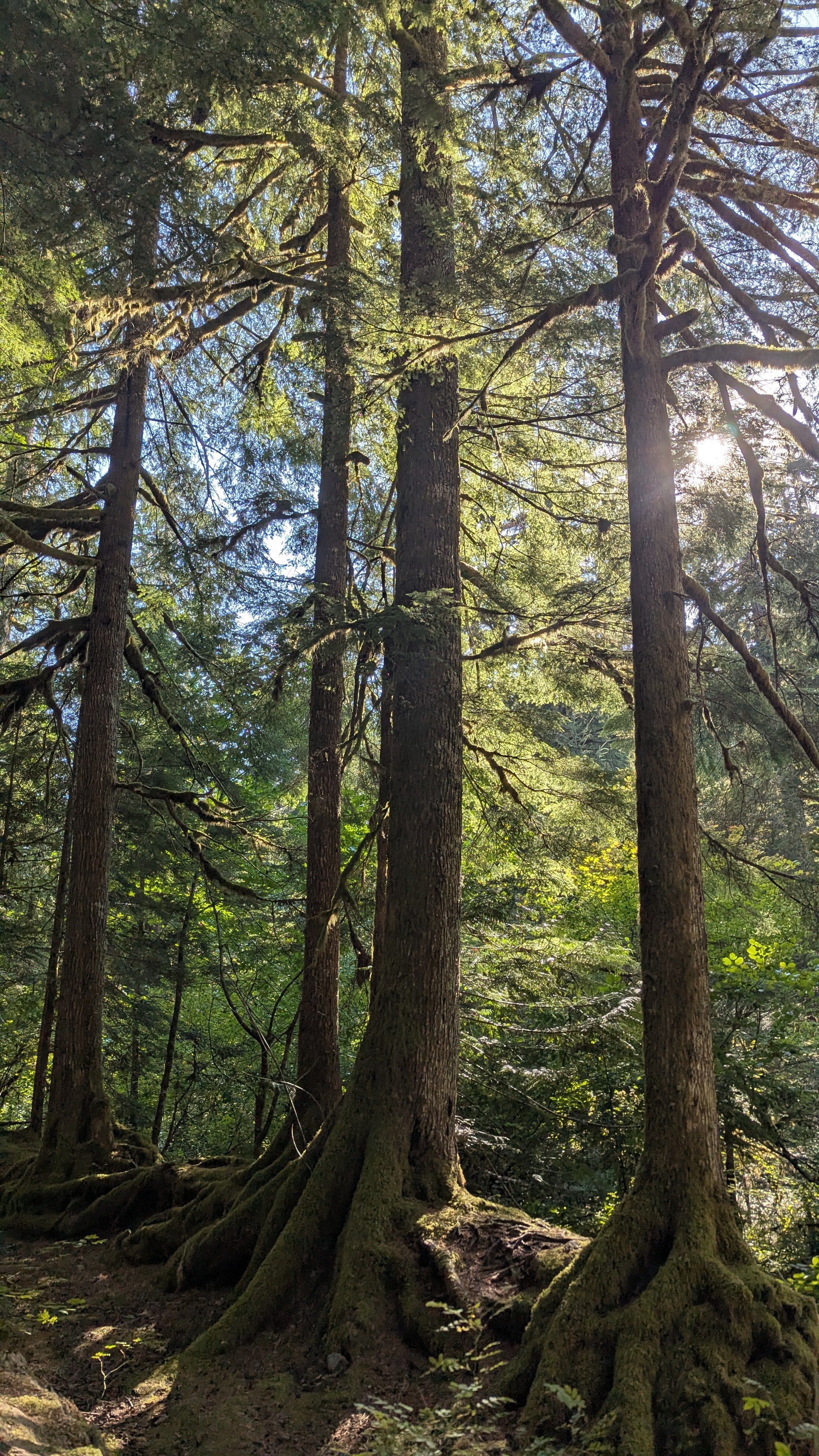
As an old growth forest in the rainforest at the base of Mt. Hood, the Salmon River Trail is one of my all time favorite places in the world. Being surrounded by all of those ancient trees, towering so far above me, leaves me feeling small and insignificant, in a really good way. It’s similar to how I feel looking up at a clear night sky, dwarfed by all of the stars and galaxies, that help me keep my life and my problems - which often feel huge - in perspective.
These trees also teach me about resilience. The way they extend their roots, moving them to exactly where they need to be based on whatever their surroundings dictate. Growing down, sideways, over and around a nurse log. To see all the formations of these root structures in a variety of forests around the world is fascinating - and also very grounding, because while they each offer a nuance in structure and visual appearance, they are all pretty much the same. Strong, resilient, and adaptive.
And then there are trees - like those below - who sprout new trunks, or simply move their trunks around whatever might be in the way. Sometimes that object is still there - a nurse log, boulder or hillside. But other times, it has disappeared, rotted away, transitioned back to the earth as nutrients, leaving us to wonder about the original relationship.
What can we learn from these trees and roots? What would it look like to be stronger, and more resilient and adaptive like these trees? To meet our environment as it is, and work with and around what is? What might that look like for each and all of us as a community?
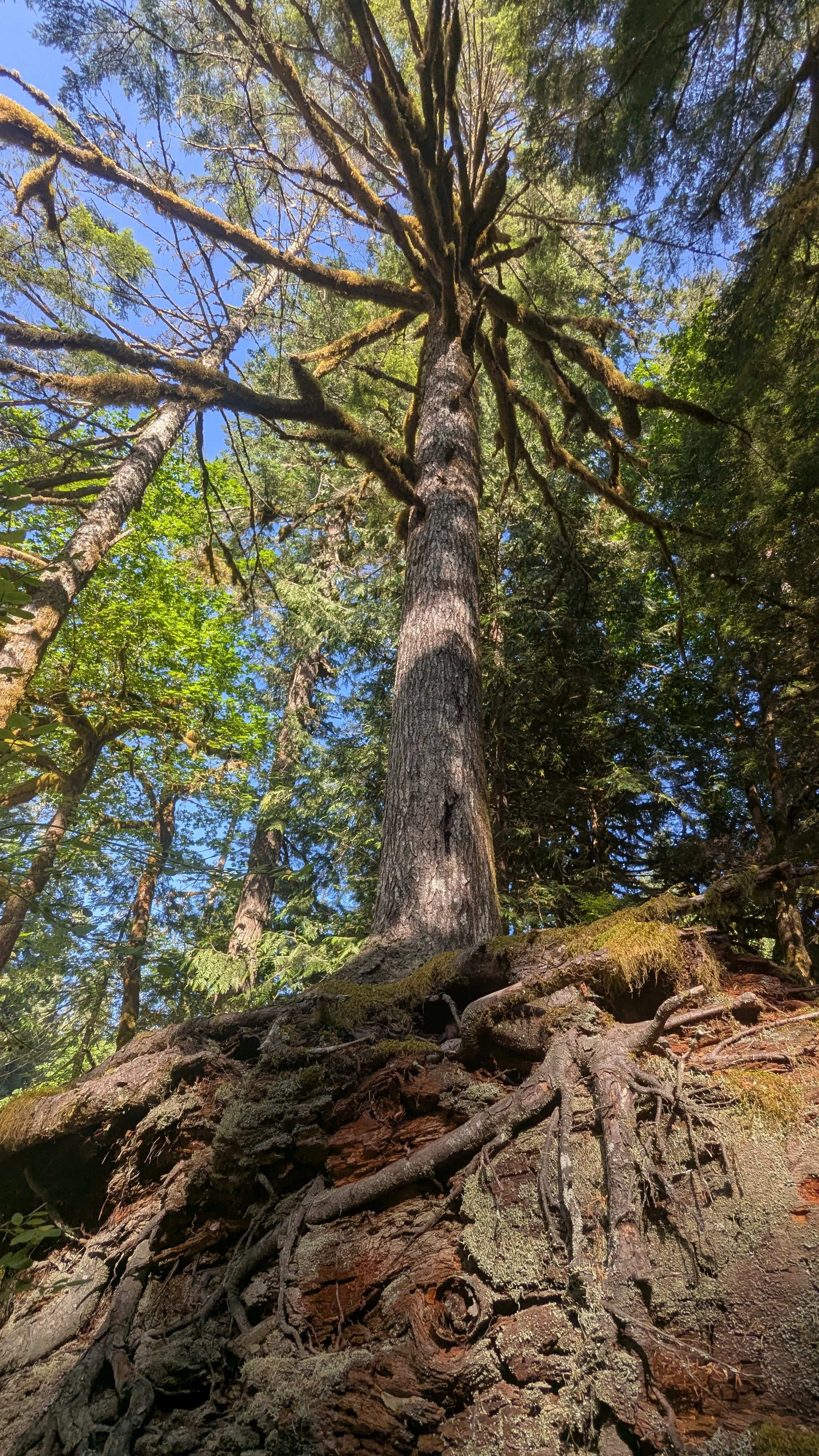
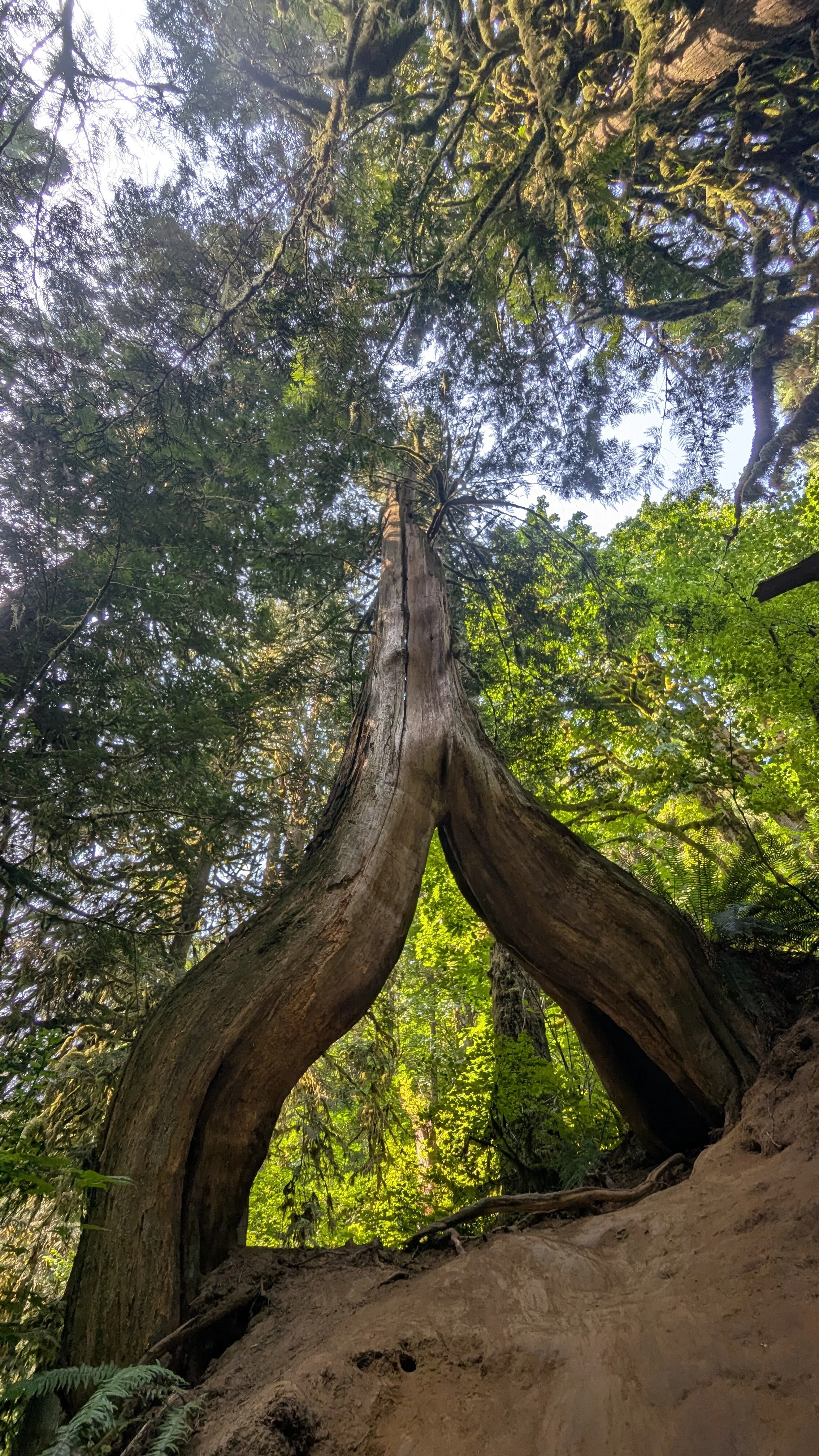
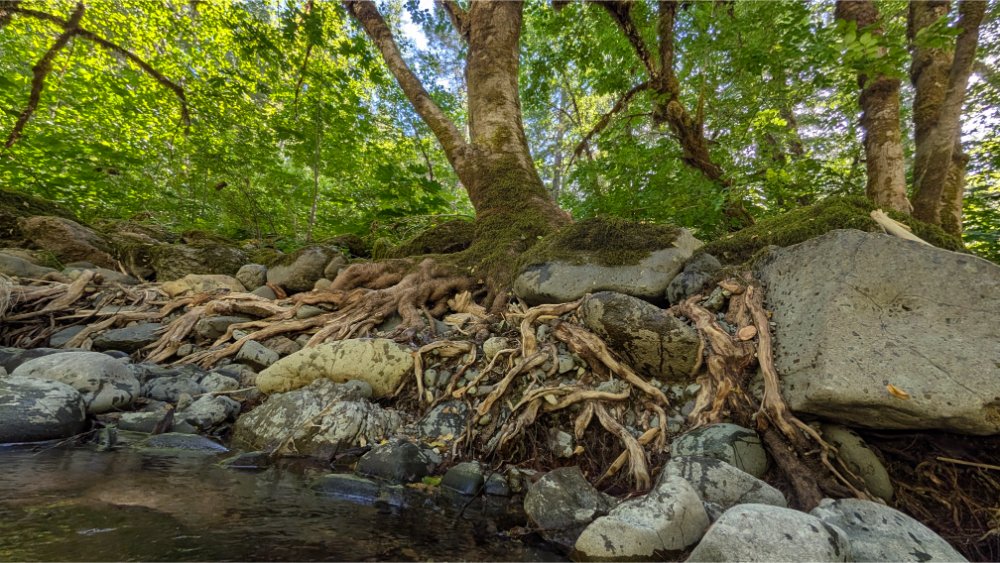
Amazing root structures along Steamboat Creek in Southern Oregon in August. Photo by Tamara Staton.
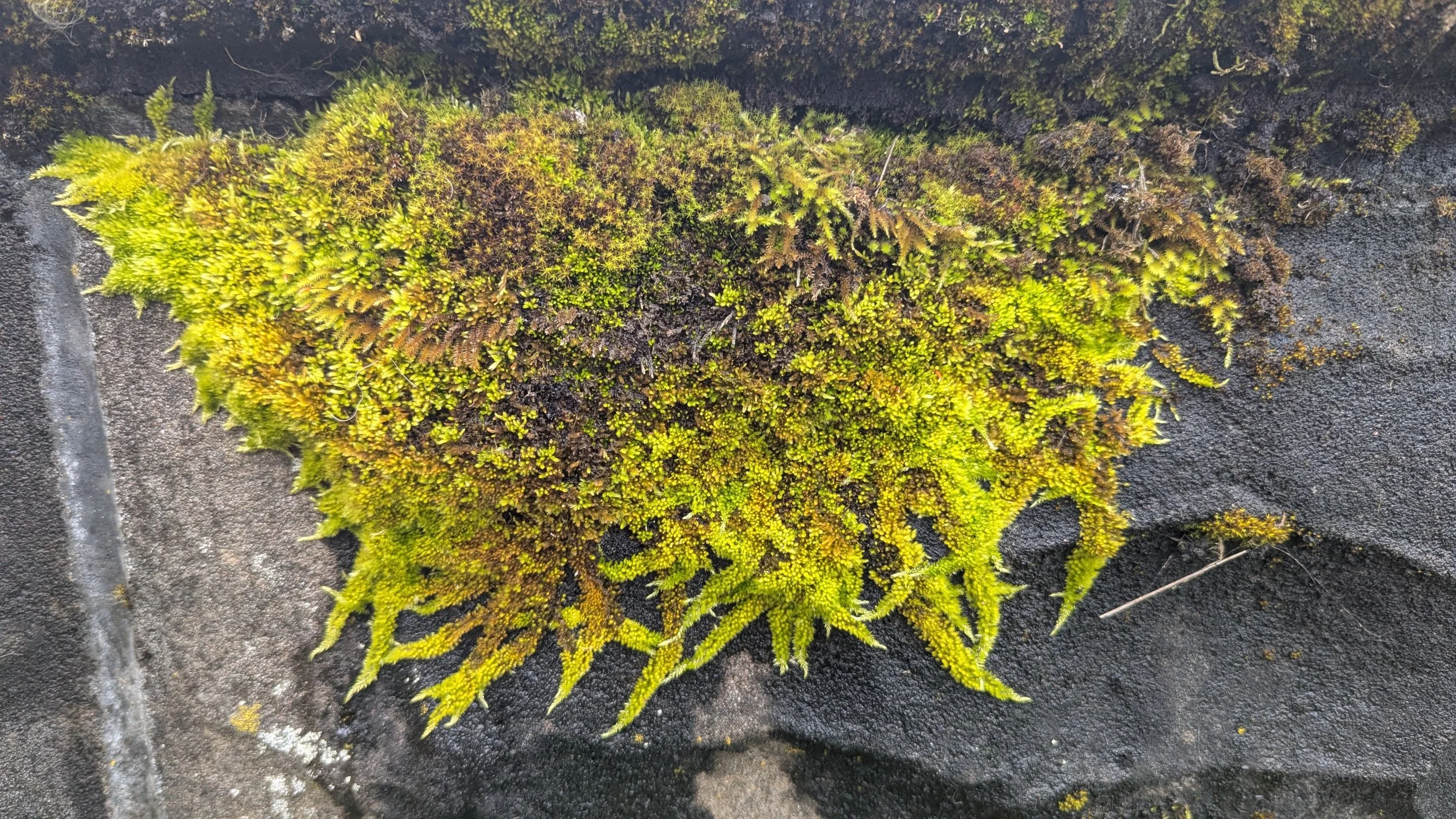
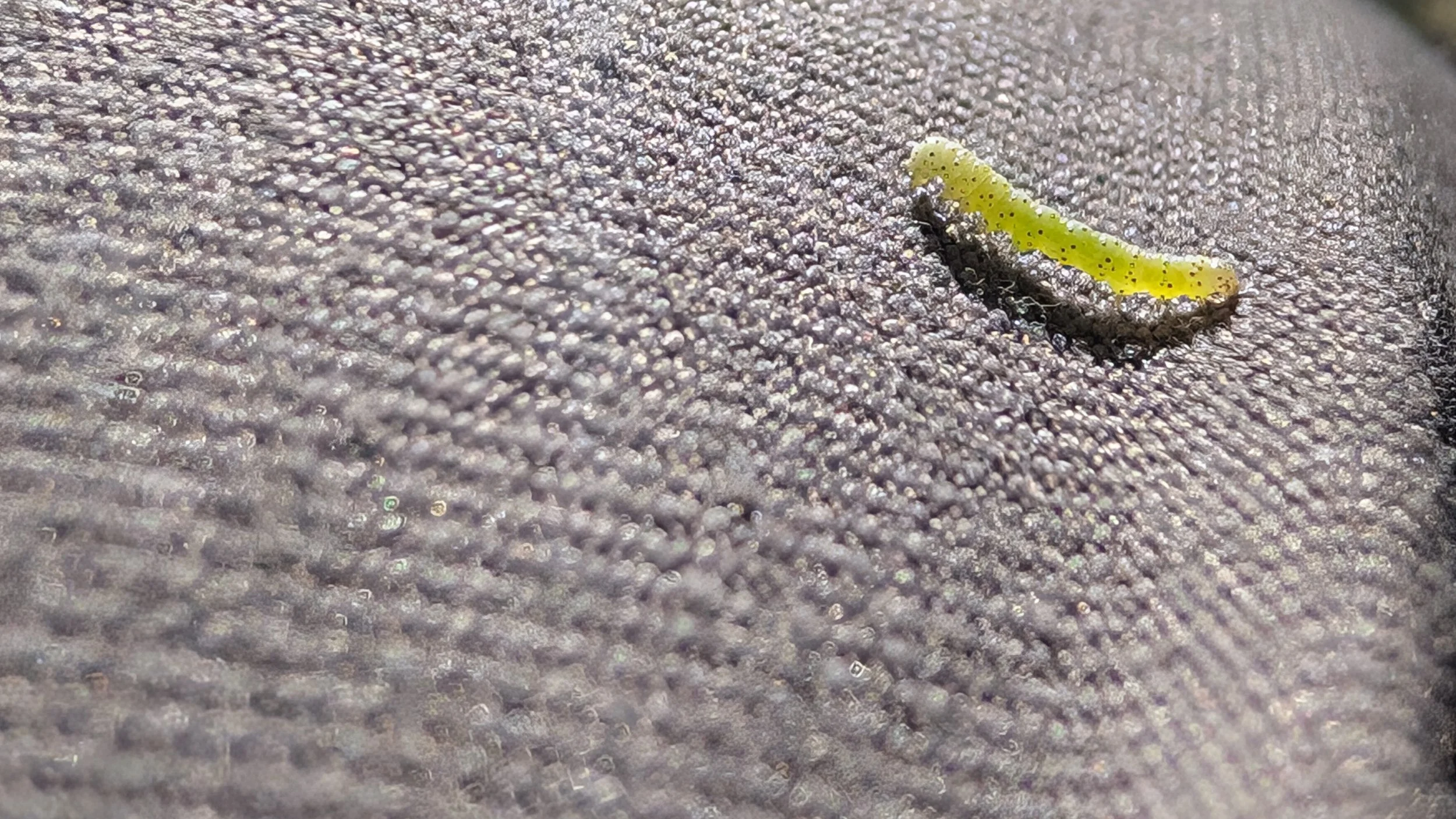
And in the same way that trees and starry skies helps me put things in perspective, so does taking a really close look at life. Zooming in and getting curious. Moss is everywhere in our neighborhood - it’s Portland, and often quite wet. It’s easy to overlook it, just letting it blend into the surroundings. But it’s amazing to take a closer look. Noticing how it sticks to the wall, the variety of colors and textures, and most fascinating to me, how those bright green tendrils spread. And with that inchworm, noticing such similar colors to the moss across the neighborhood, as it crawled on Geoff’s pant leg. Watching it move, seeing its translucent body, noticing how its legs grip the fabric.
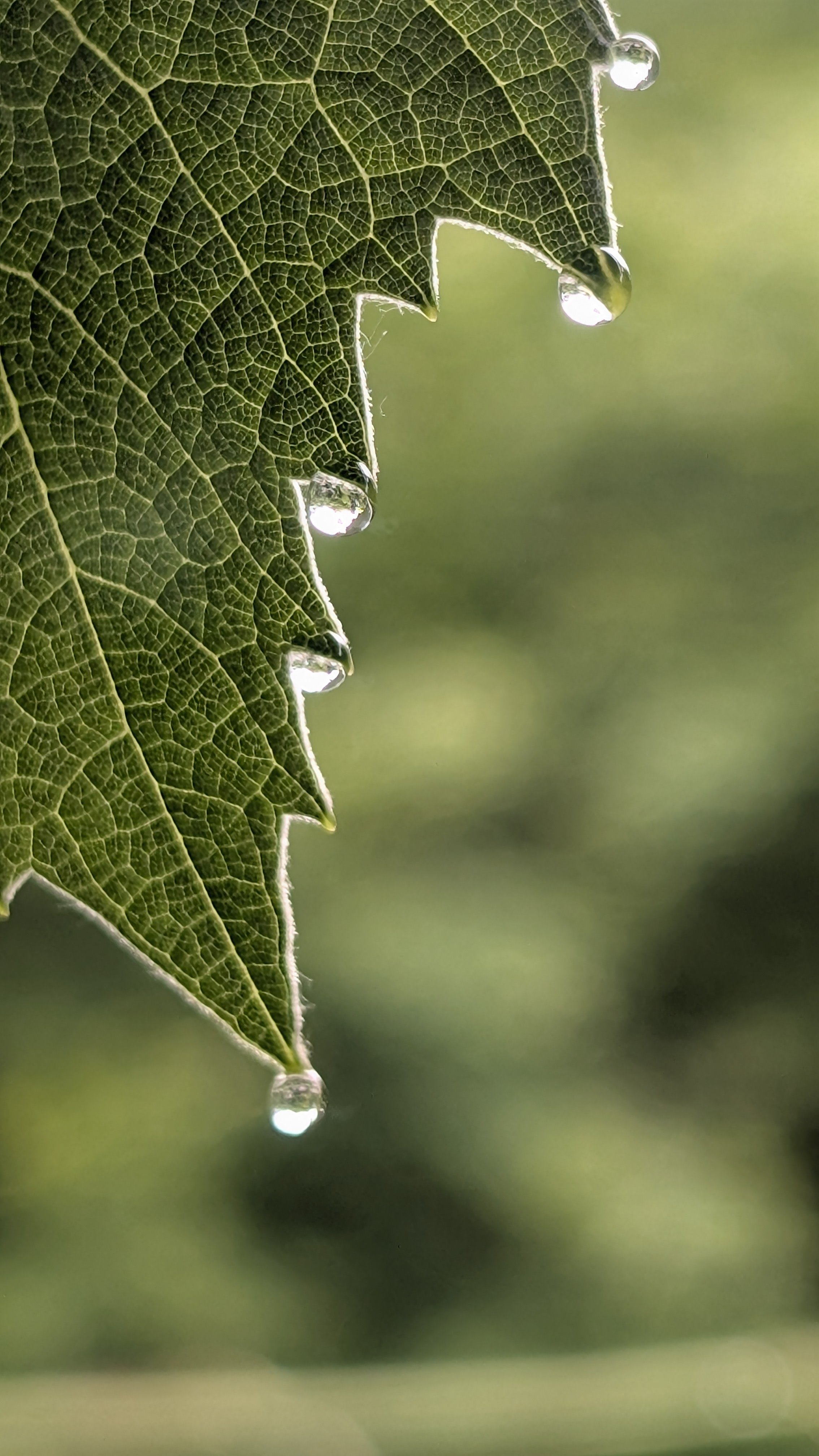
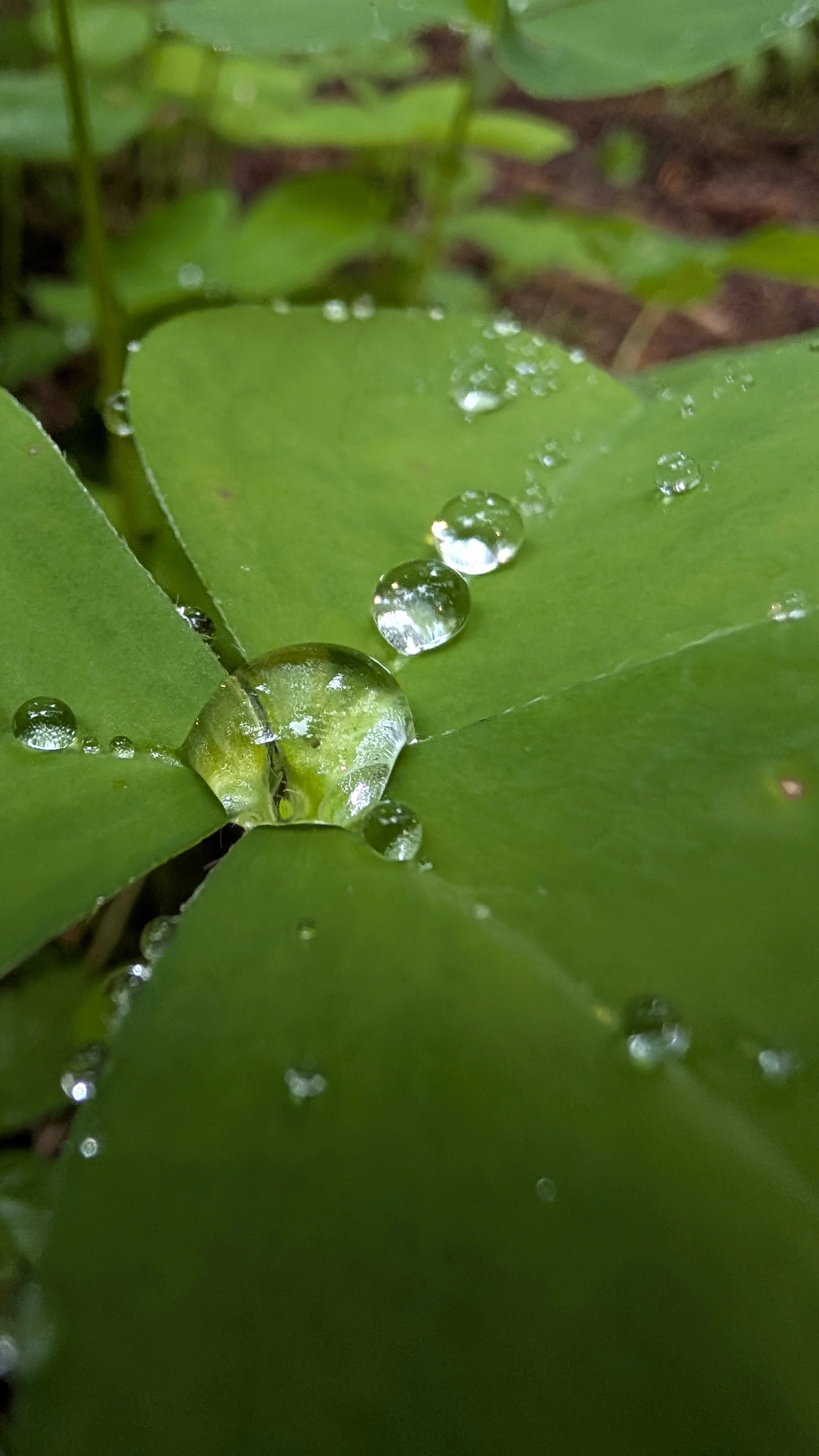
Taking a closer look and getting really curious helps me slow down and tap into the awe I feel about the natural world around me. Noticing how water collects on the points of a grape leaf, and seeing the fuzzy edges and the fractal patterns between the leaf veins that Geoff captured with his macro lens. And noticing how the water beads on the surface of the clover and magnifies the middle even more. This is the epitome of soft fascination…calming and mesmerizing.
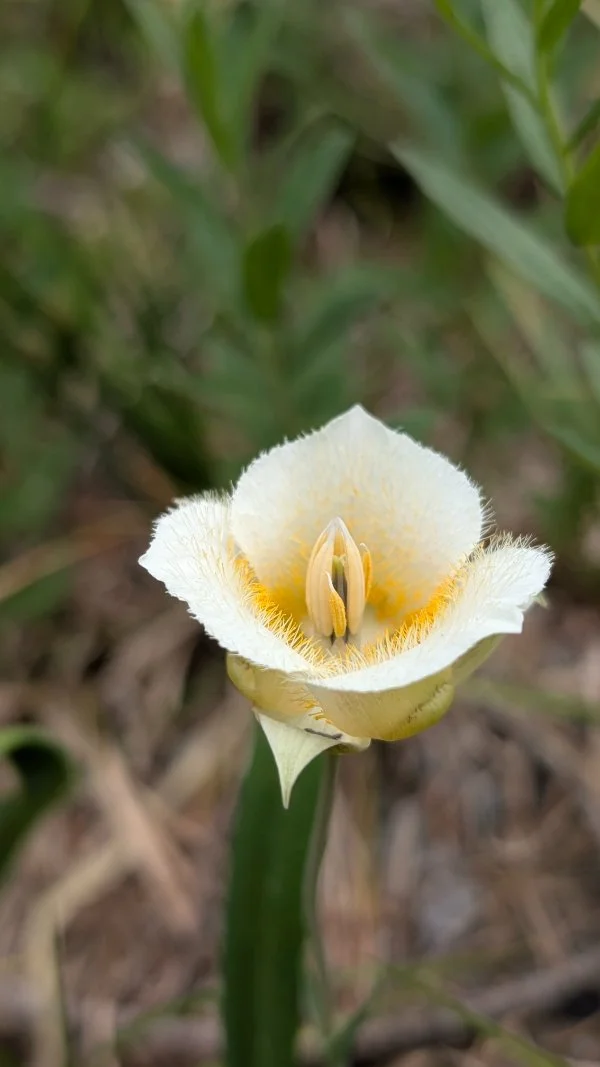
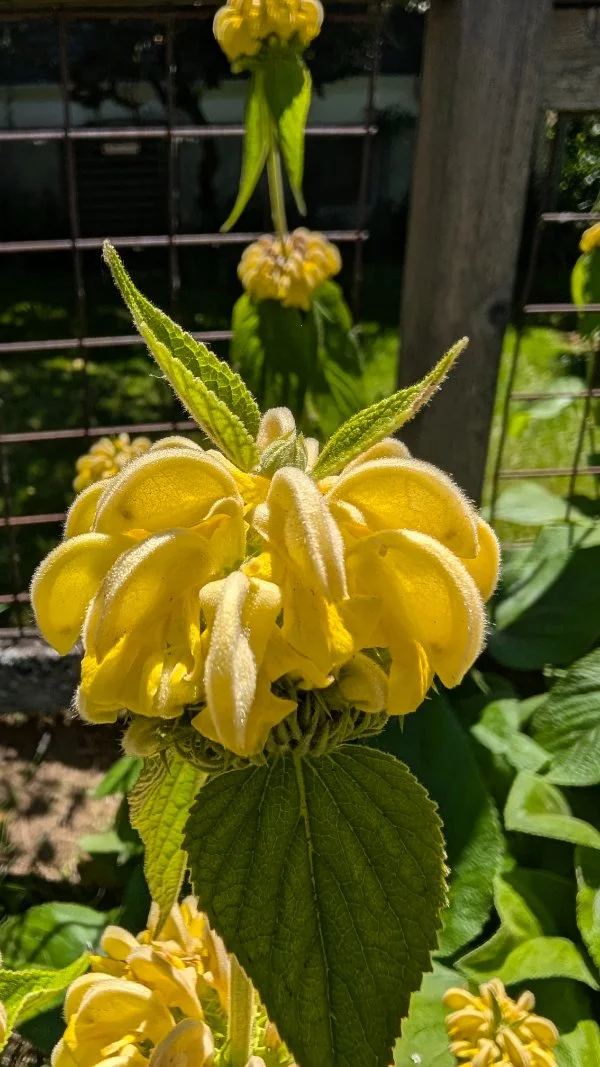
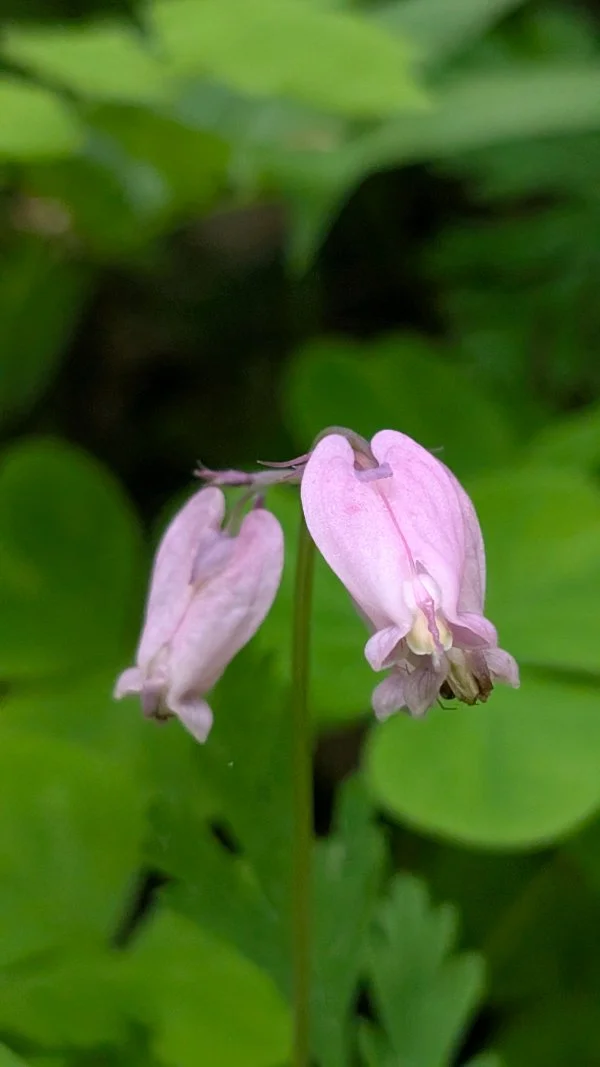
Focusing on bright flowers has a similar effect. Like the fuzz on that first flower. And how it sits there so calmly, just being. With no need to go anywhere, do anything, be anything different than what it is. Being inherently attractive, and unique, with a purpose. And that being enough.
And then there's this. The high desert. My favorite landscape. After all the watery green, the desert offers something completely different. Vastness without lushness. Soft fascination in stillness and space vs. movement and growth. Pure extent and healthy escape. After hundreds of nights under the stars, sleeping amidst sage and basalt canyons, this landscape soothes my soul, taps my curiosity and feeds my excitement. My heart slows when I stare at those walls. I see possibility in those hills, and a deep sense of spaciousness in the purity of that blue sky. This landscape leaves me feeling that nothing is wrong. Even when it is. Which is exactly when we need that sensation - even just for a bit, to fill our cup and help us keep going and going and going. Even when it’s hard. Because it’s hard.
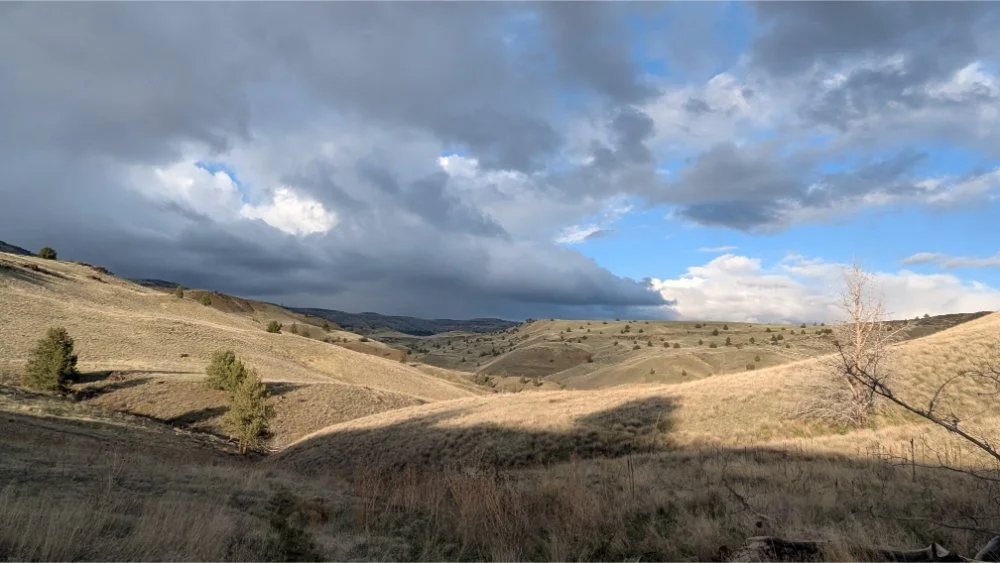
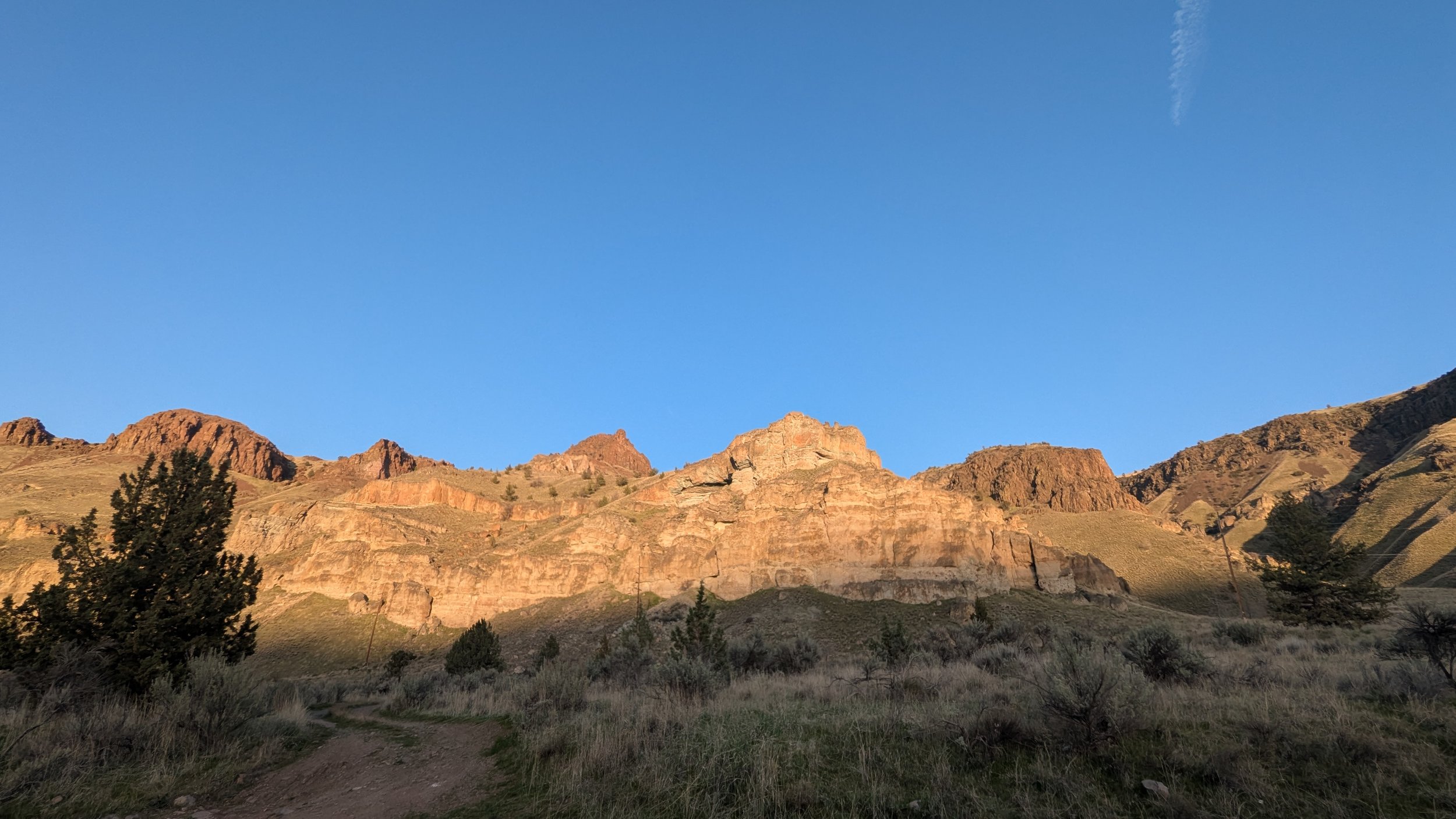
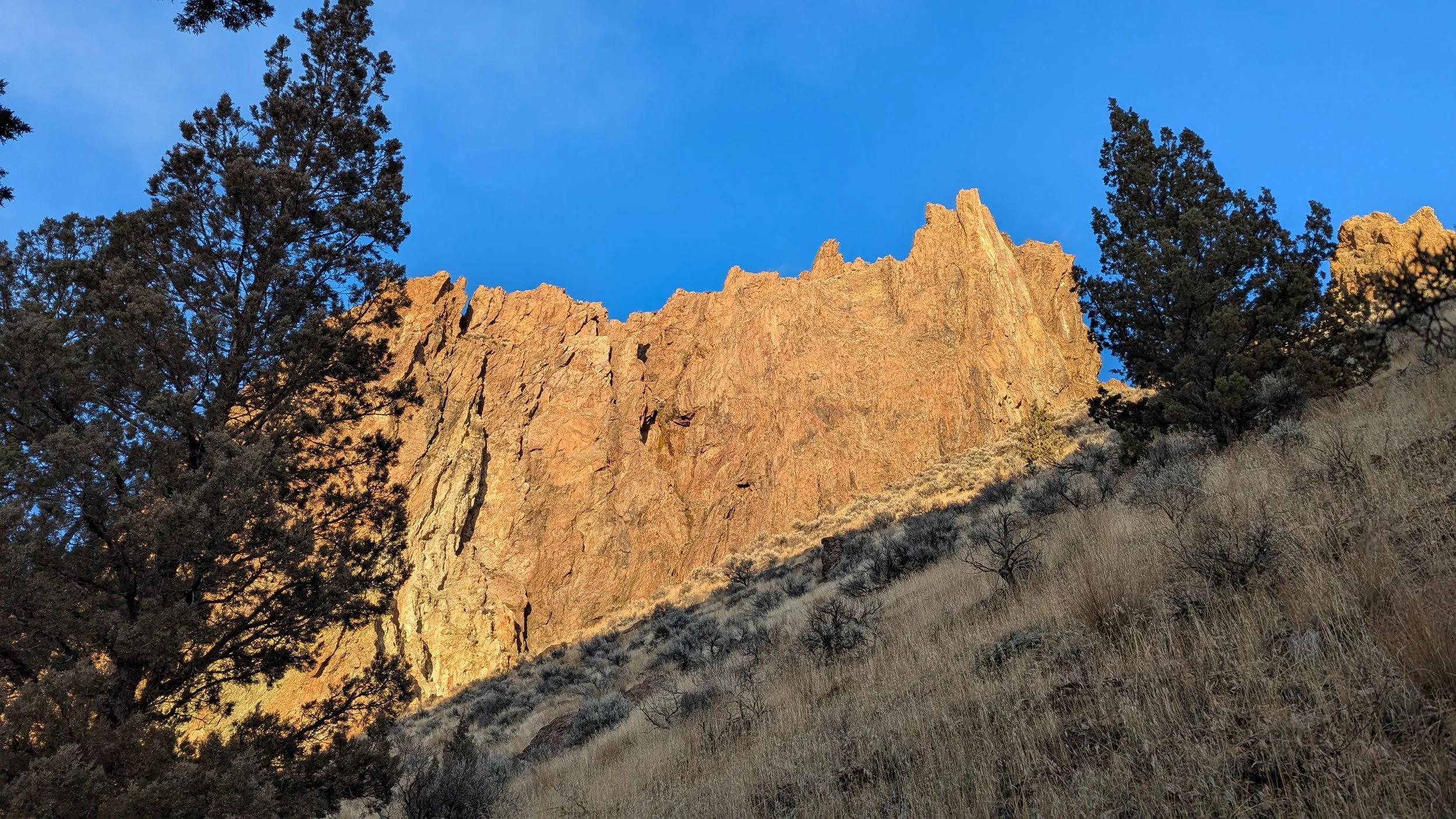
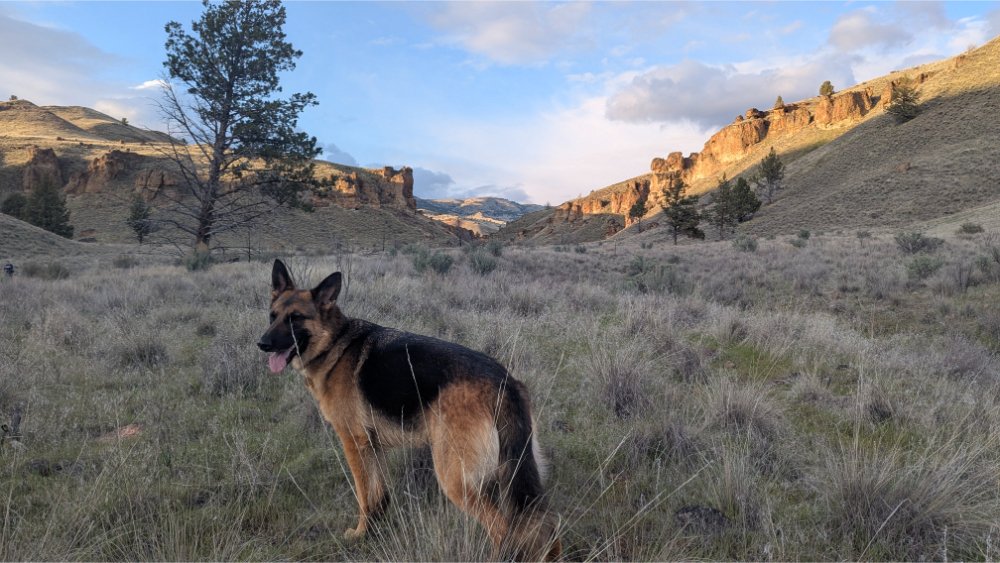
What makes these places work their magic? The researchers point to four things: extent (expansive environments that invite exploration), escape (the simple act of being away), fascination (that soft, inviting quality), and compatibility (being able to engage in ways that align with what you actually need, not what you're supposed to do).
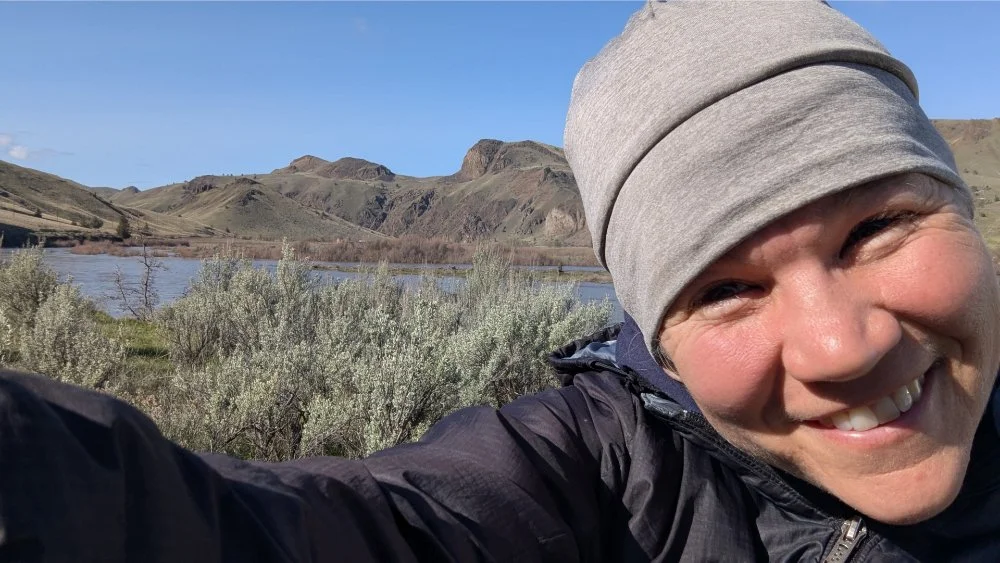
High desert bliss selfie on the John Day in May. Oregon.
Looking at this year's collection, I see all of that. The curved edges of trees and hills. The fractals in leaf and river patterns. The permission to just be rather than perform. This is why I return to these places when things feel heavy, because being out here helps me access my lighter side - so I can create meaningful change in the process of enjoying my life.
And I know I’m not alone in this. Your lighter side is out there too, waiting in the soft fascination of whatever natural spaces you can acces…all. year. long.
